
HANDLING OF LITHIUM-ION FIRES
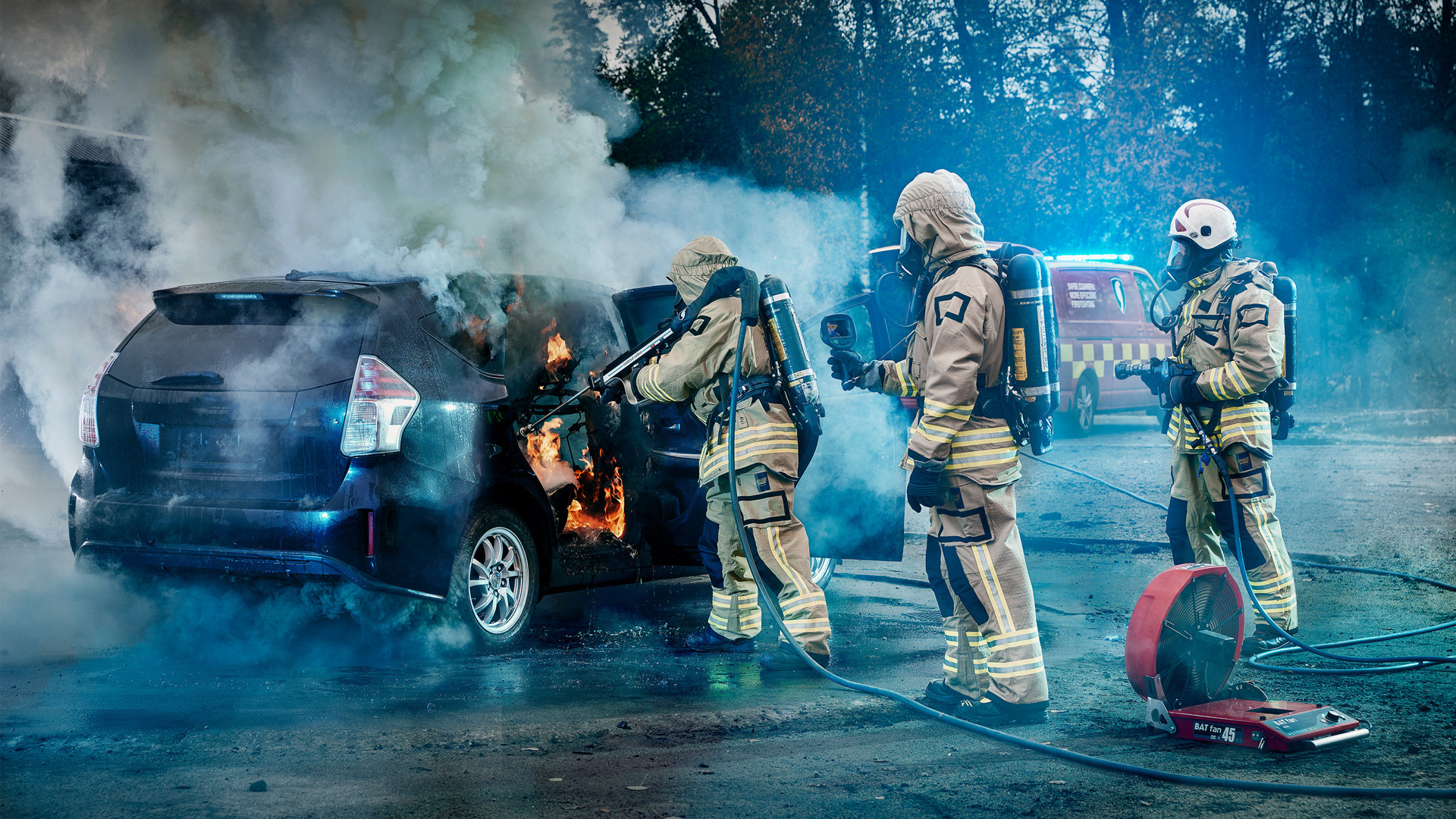
In collaboration with several other companies and organisations, Cold Cut Systems has investigated whether Cobra can be used on lithium-ion battery fires.
After years of systematic testing and knowledge acquisition, Cold Cut Systems is delighted to finally be able to pass on our knowledge and experience to others. The test results have been very positive, showing that stopping lithium-ion fire propagation with Cobra is possible.
Fully developed propagations in lithium-ion batteries are very rare. But when they occur, Fire and Rescue Services lack a practical method to interrupt the process of fire and thermal runaway in batteries using lithium-ion technology. Until today, the methods available mainly comprise different ways of limiting fire spread and/or cooling the propagating battery pack externally with large amounts of water. In addition, there is a risk of re-ignition when handling affected lithium-ion batteries.
Based on the findings, we can present a manageable solution to one of the Fire and Rescue Services biggest challenges. The test results show that there is a method for extinguishing fires in lithium-ion batteries.
Tested & Proven
We received early indications that Cobra could be a suitable tool for this type of fire. However, one of the cornerstones of Cold Cut Systems’ philosophy is that what we say about Cobra and its effects must be properly tested and evaluated. We, therefore, started a pre-study in 2021 to investigate Cobra’s effect when used on lithium-ion fires.
The results from the pre-study showed promising results for further studies and tests. In 2022 we therefore, joined a collaborative project. This new project is a joint effort between automotive industry stakeholders and equipment manufacturers, with the Swedish Civil Contingencies Agency (MSB) as project leader.
Several controlled extinguishing tests on propagating lithium-ion battery fires have been made within the project. In the initial tests, different tools, including Cobra, were used to demonstrate the efficiency of stopping propagation by getting water inside the battery pack as close as possible to the propagating cells, thus cooling the cells and stopping propagation. In the final test, only Cobra was used.
Overall, the project showed that it is possible effectively to stop propagation in a battery pack by means of internal cooling with water. The ultra-high pressure water mist and capability to pierce through any known construction material makes Cobra a very well-suited tool for this purpose.
Importantly, Cobra is not just a lithium-ion battery fire extinguisher; unlike many specialised tools for these types of fires, it is a versatile tool for many firefighting scenarios.
About the Project
The objective was to study the prospect of improving extinguishing operations and reduce the amount of extinguishing water necessary to stabilise thermally-damaged lithium-ion battery units. In addition, the demonstrated method was intended to enable safer handling after incidents involving battery-electric vehicles.
The overall aim of the demonstration was to contribute with experimental experience to the methodology of flooding lithium-ion batteries with water in the event of a fire and to show that it can contribute to faster and more efficient extinguishing, provided that it is possible to access the battery in a safe way. The extinguishing method aimed to stop thermal propagation in the lithium-ion battery.
Successful Results
The results of the project are considered to be successful; the propagation was stopped and thermal runaway was interrupted. All tests within the project have been completed, and a report with the findings and results is now published. The conclusion is that the project has developed a method to stop propagating lithium-ion battery fires by flooding the battery with water. In addition to explaining and demonstrating the response methodology, the causes and handling of lithium-ion battery fires have also been addressed.
How do you put out a lithium-Ion battery fire?
Research and practical applications have confirmed an effective method for using Cobra to manage lithium-ion battery fires in electric vehicles. Cobra interrupts an ongoing propagation by internally flooding the battery with water, which cools it and prevents further thermal runaway in unaffected battery cells. The pressure generated by Cobra (300 bar) quickly creates an internal flow that cools the battery modules. Here is a concise summary of the method:
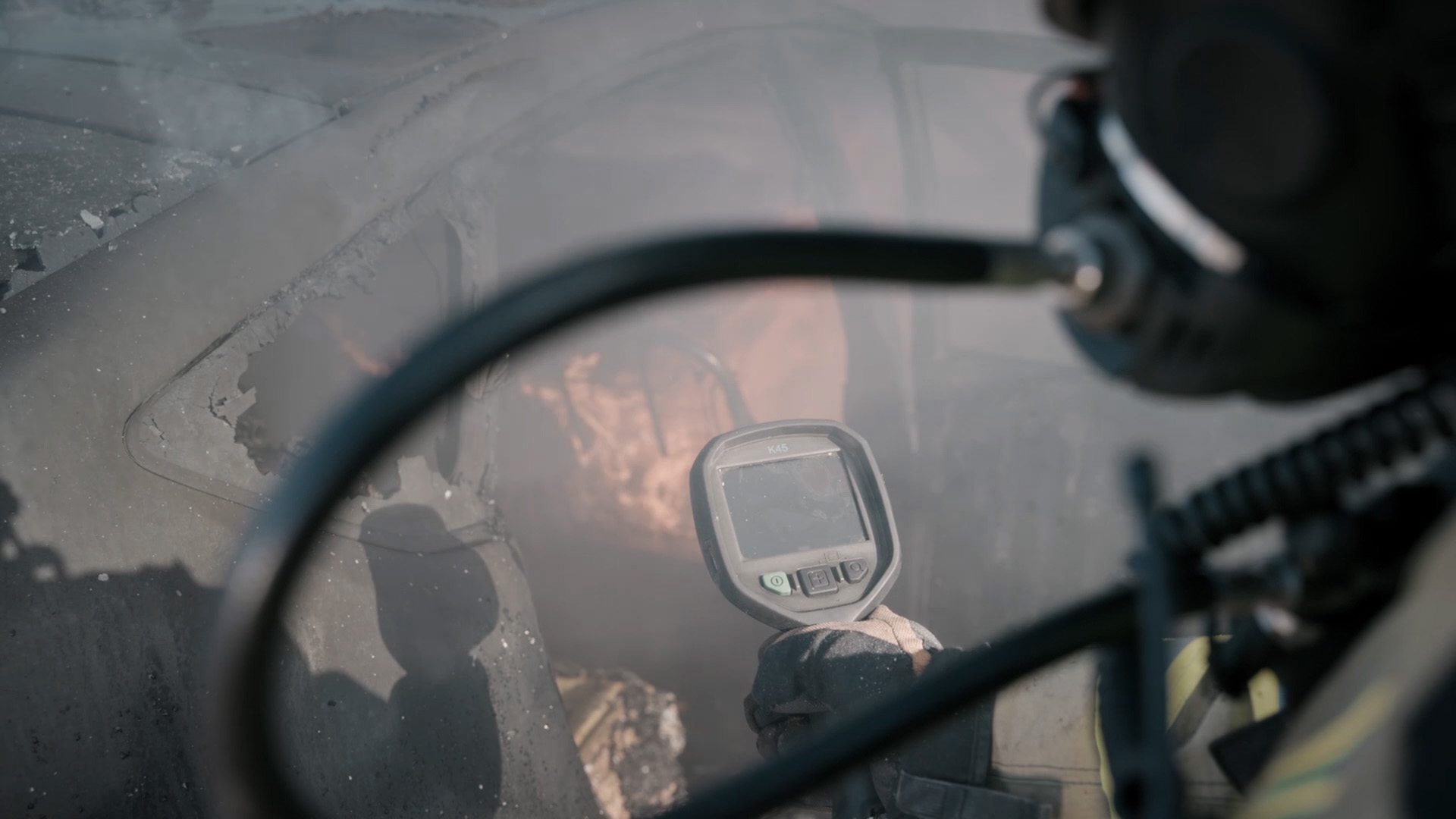
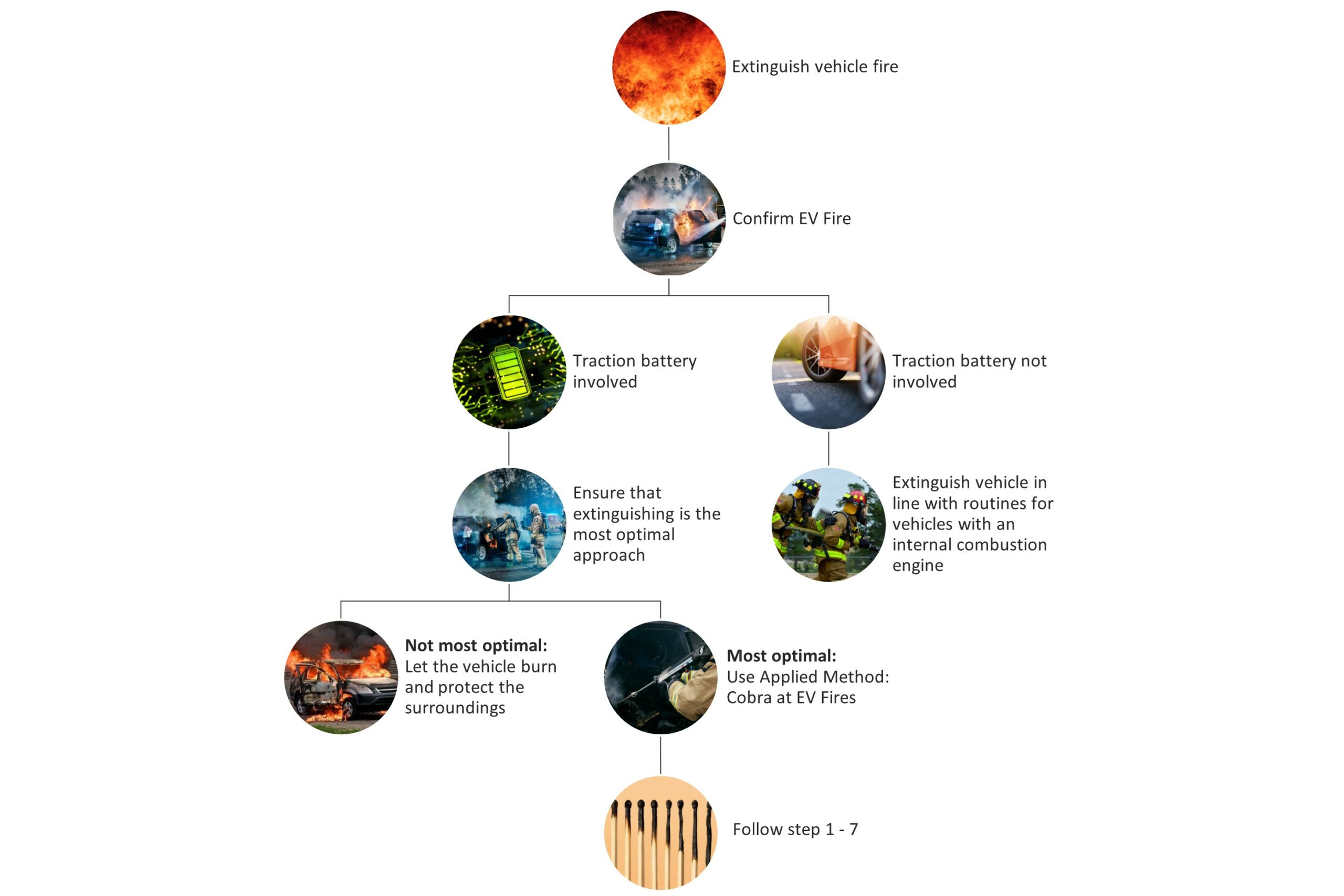
To effectively manage an electric vehicle fire involving the traction battery, begin with a thorough risk assessment to ensure the situation is safe, and ensure you are wearing appropriate protective gear. Extinguish the car fire according to your organisation’s standard procedure. Use a Thermal Imaging Camera (TIC) to locate hot spots. Position the Cobra lance as close to the hot spot as possible and cut through the vehicle’s structure to access the battery. Establish a flow with the ultra-high-pressure water mist and flood the battery pack to cool it and stop the propagation. Continue flooding until the battery pack’s temperature has dropped and reached a stable level.
We recommend that you take our EV battery fire course to become fully prepared to deal with EV fires.
Do you need assistance?
Our sales team is happy to answer any questions and guide you to the best solution for your needs.

“Demonstration of an extinguishing method for lithium-ion batteries”*
The report can be found on the Swedish Civil Contingencies Agency (MSB) website, www.msb.se (currently in Swedish only)
*Freely translated from the original title: “Demonstration av släckmetodför litiumjonbatterier. Metodtillämpning på olika aggregationsnivåer – modul, sub-batteri, elbilspack och fordonsnivå”
Please note
In the event of an electric vehicle accident, it is important that the vehicle’s rescue data sheet is used and that other safety routines are followed. The temperature of the battery pack should be monitored continuously with a thermal imaging camera.
Full EV test images
The images on the full car fire tests on this page visualizes the tests on the full Electric Vehicle and is not from the actual test as those images cannot be published due to legal reasons.